overland route planning. @dirtroadtrip @gooutandplay @thenewartemis @adventurevida #overland #offroad #camping
You've got your eyes set on gravel, dirt, camping and ultimately you plan to escape the big city this weekend, but you don't know where to start. How can you plan a road trip without logging hundreds of miles on tarmac?
In this post, we'll give you some insight on how to plan your next overland route while avoiding the painted lines and freeways that separate us from the wild.

Huddled up for some last minute route planning on Tub Run Rd. in New Castle, VA.
Step 1. Consider your goal?
We invited Dirt Road Trip (DRT) and Rick Stowe, a contributing writer from The New Artemis, to join us on a Appalachia-style overland adventure for Episode 4.
DRT was bringing their capable Land Cruiser and 4Runner. We wanted to be certain that DRT traveled some terrain that would test their trucks.
Rick was writing a behind the scenes article on adventure film production and overland culture. We wanted Rick returning home dirty, dusty and smiling.
Our goal was pretty simple, keep it wild, keep it rough, find some great campsites and treat everyone to some southern hospitality.
Step 2. Use your resources.
The key to planning an overland route is to focus on using resources; don't start from scratch. There is an ocean full of routes planned and reviewed all over the internet, you just have to look. Websites like Expedition Portal and the Adventure Journal are just a few that we use to help us get started.
As natives to WV and VA, we've got a leg up once planning starts but we often end up in places we've never been. For Episode 4, we hunted down routes in SW VA because of its proximity to both parties; DRT was coming from NOVA and Rick from western TN.
After some quick internet searches, we had our hands on some recommendations that could give our trucks a run for the money and they were centrally located for both DRT and Rick.
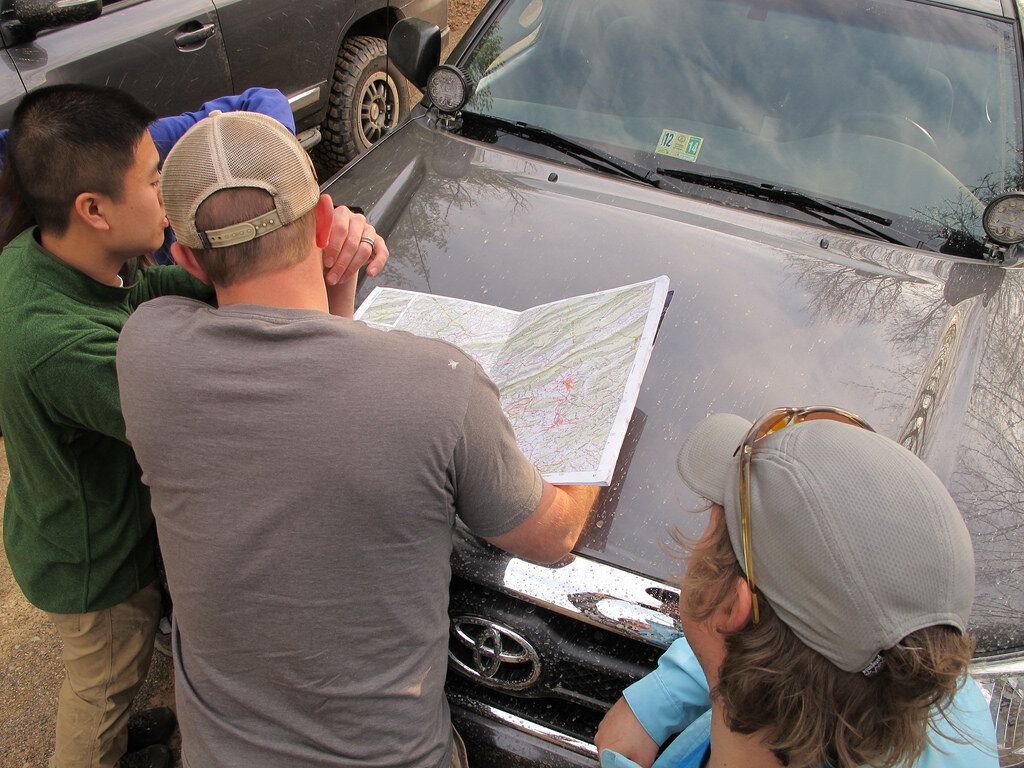
A gazetteer is a reliable alternative to a GPS enabled device.
Step 3. Create your map.
We use Google Maps; its free but its a little tricky. You can't put in your starting and destination points and expect your route to unfold; you have to lay down your tracks.
We built our route using Google's 'Create a Map' tool; I won't bore you with a "how to" on using Google Maps, just start playing with it. Make sure you set your map for "walking" directions; otherwise, Google won't let you mark the the forest roads.
Plan on mapping out more miles than you expect to travel. This gives you options if you come upon a forest gate or private property and need to reroute.
Step 4. Review your route.
Once you got a route laid out in Google Maps, take an aerial tour of it - you'll be surprised with what you see. You can often tell the road quality which can help you determine if your route meets your goals.
You'll often see some creek crossings, tight spots, rocks and even campsites in your aerial overview. Spend some time overviewing the route so you know what to expect when you get there.

On the banks of Broad Run in Craig County.
Step 5. Campsites and destinations.
If you plan to camp, which you should, mark a couple destinations as you come across openings along the roads. In most National Forests, you can camp anywhere, so long as you're far enough off the road and their aren't any other restrictions in each particular district.
Pin potential campsites, overlooks, photo opportunities, gas spots and hazards; you'll be happy you did later.
Step 6. MVUM.
What's a MVUM? Most forest service districts put out motor vehicle use maps (MVUM) that indicate which forest roads are open and which are closed.
For Episode 4, we identified all of the forest roads and referenced the MVUM. Even though it was a couple years old, the MVUM was 95% accurate; you'll see what we mean when Episode 4 airs.
Also, pick up the phone or stop by a ranger station in the district you'll be traveling though if you want to be 99% certain. Why not 100%? Well, lets be honest; we're talking about the government, right?
Step 7. Create your .gpx file.
A .gpx file is what you'll need so that you can upload your route into your GPS device. I know there's mixed opinions on GPS; however, when time is limited for your trip you'll be happy you have it. We use GPS Visualizer to convert our Google Maps to a .gpx file. You can search the net for "how to" steps on the conversion process.

Alex from Dirt Road Trip uses an iPad to help us navigate Big Walker Mountain.
As for GPS, use your iPhone or iPad; GPS specific devices are overrated in my opinion, but they have their purposes. Gaia GPS is a great app to help guide you off the beaten path and it works wonderfully without cell service; you just have to remember to download your maps onto your device or you'll be up a creek without a paddle. Either way, it'll be an adventure!
Step 8. Share.
Finally, share your route with your trip companions. Prior to meeting up for Episode 4, we emailed the .gpx file to DRT and Rick. This allowed the team an opportunity to familiarize themselves with the route and offer suggestions if they've traveled parts of it before.
Sharing your route is a gift. You're passing on a little "secret." If the route turns out to be epic, you're passing on something that will continue to deliver memories for several years to come.
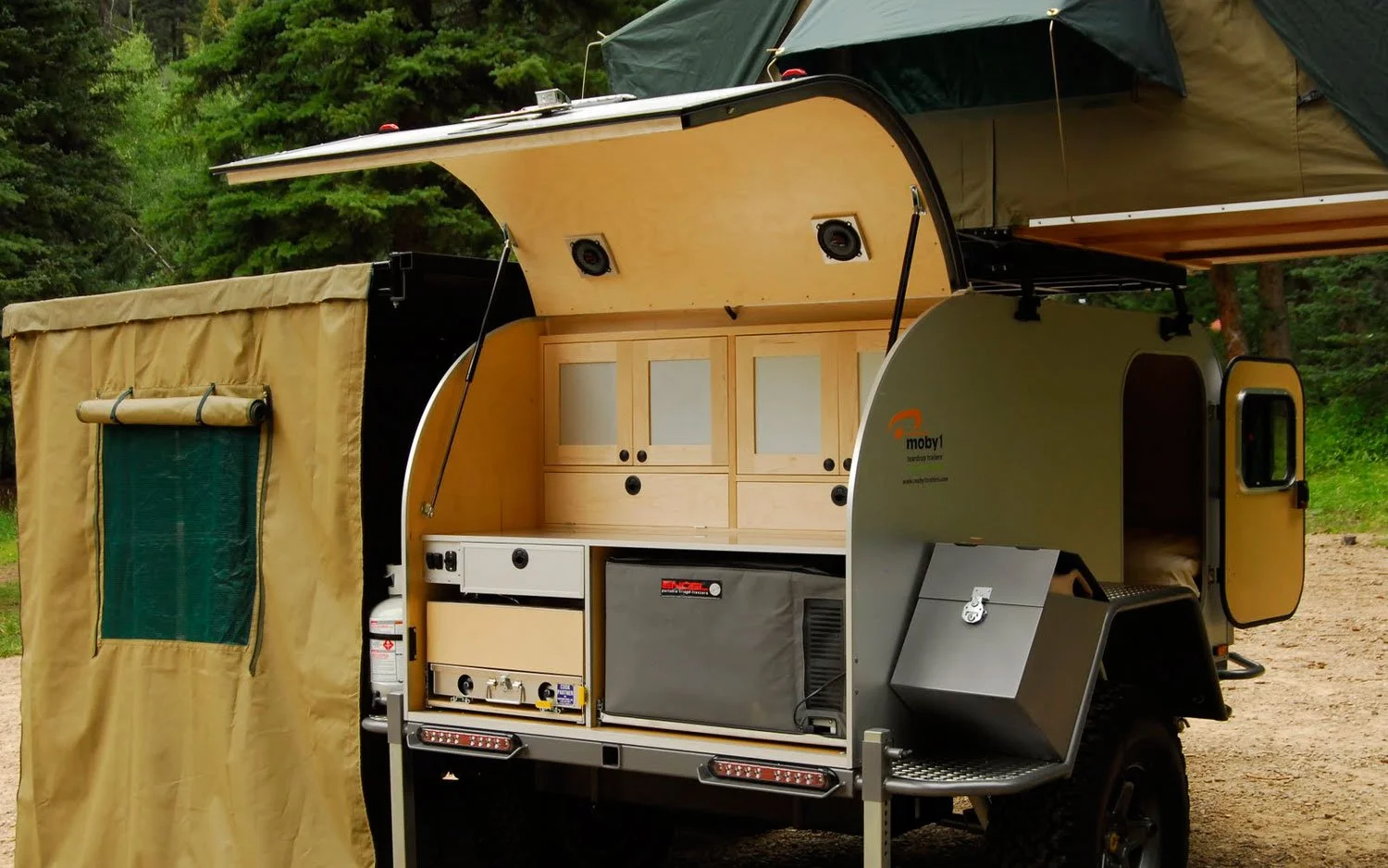
moby1 kenobi? @inhabitat @moby1trailers #living #wild #outdoors #overland
Sorry for the Star Wars pun everybody, but judging from the picture it really brings to mind a space ship carrying its passengers far and wide; definitely something I want on my next overland adventure.

"Moby1's stylin' XTR is a modern spin on the classic 50s Teardrop Trailer, incorporating new technologies and an array of cushy amenities. Lightweight, small, and quite comfortable, these camping trailers include a roof top tent, space for a real mattress, running water and solar panels. Built to be a modern and mobile micro-home, the XTR has everything you need to live it up in the wild."
Referenced by Inhabitat
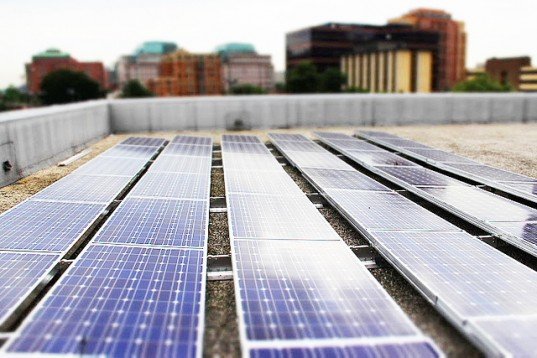
solar cheaper than fossil fuels. #solar #PV @inhabitat @GoldmanSachs @elonmusk
"They may be one of the greediest, most exploitative firms on Wall Street, but Goldman Sachs knows a profitable investment when they see one. The company recently released a report that states solar energy is fast approaching grid parity – the moment when electricity from solar power becomes the same price or cheaper than electricity produced by fossil fuels. The report also cites the vision of Tesla CEO, Elon Musk, as a major factor in the growth of renewable energy. Tesla’s recently announced lithium-ion 'Gigafactory' is expected to reduce EV battery costs by more than 30 percent. That, coupled with the fact that solar panel prices continue to plummet, is a big reason why Goldman Sachs sees renewable energy as the path to the future."

Elon Musk, Tesla CEO
Even Wall Street bad boys Goldman Sachs know a good thing when they see it. Imagine a world where bankers and car makers are working hand in hand to make the world a better place. Man that may be too much for even me to believe, someone pinch me!
Referenced by Inhabitat
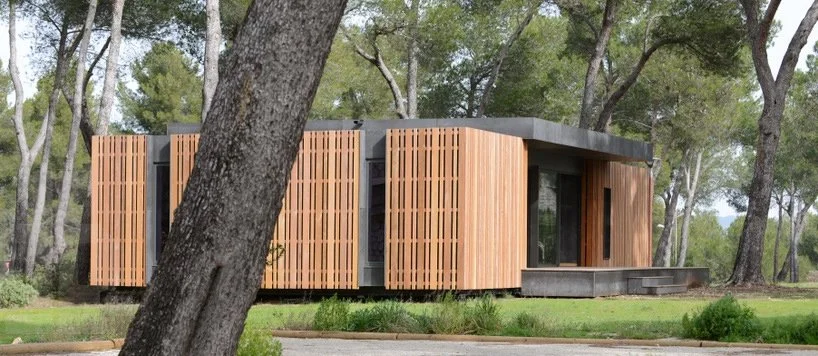
Pop-Up House @MotherNatureNet #MultiPodStudio #Architecture
"A modular passive house concept out of France dubbed Pop-Up House has been generating a fair amount of ooh la las over the past few days — and for good reason, as it would appear to truly live up to the claim presented in its tagline, which to some, could be read as an oxymoron: “Making passive construction easy."
Never too old to play with LEGO? This crazy new design from MultiPodStudio, is a modular Passive House concept, and all you need to put it together is a screwdriver. I am guessing that they aren't talking about the Vodka and Orange Juice variety.
Referenced from Mother Nature Network
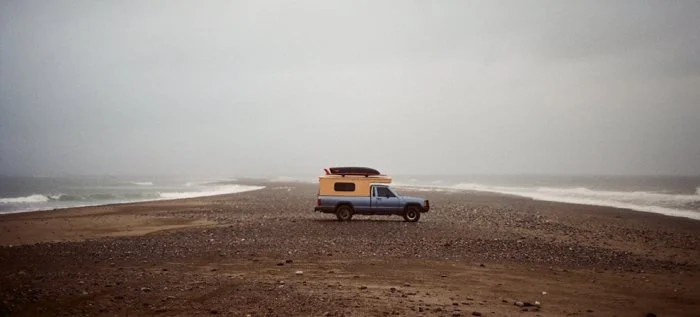
Woody and the Blue Ox @adventurevida @patagonia #surf
"Trevor Gordon‘s rig is a reminder that you don’t have to drop a few grand to get a great poptop — you just need some creativity, motivation, and DIY inspiration. Add plywood, hinges, and some fabric and you’re good to go."
referenced from Adventure Journal